
Hoardings and billboards in India: a planner's guide for the winter season
How to plan hoarding and billboard advertising in India: the main formats and sizes, what drives cost, how to judge a site, and why lit sites and longer bookings matter from November to February.
· 7 min read · TaxiTop Media
A hoarding is still the simplest way to tell a whole neighbourhood, market road or highway corridor that your brand is here. It does not need an app, a login or a scroll. People drive, ride and walk past it every day of the campaign. This guide covers the main hoarding formats used in India, what to check before you book a site, what drives the price, and how to plan for the winter months from November to February, when the wedding season and year-end sales keep brands busy.
Hoarding or billboard?
In India the two words mean almost the same thing: a large outdoor advertising site, usually on a structure beside a road. “Hoarding” is the more common word locally, and “billboard” is the one most international briefs use. We use both on this site.
The main formats
| Format | What it is | Where it usually works |
|---|---|---|
| Front-lit hoarding | A printed flex lit by lamps mounted in front of it | Arterial roads, junctions, town streets |
| Back-lit hoarding | A translucent print lit from inside a box, so it glows | Premium city stretches where night traffic matters |
| Non-lit hoarding | A printed site with no lighting | Daytime routes, smaller towns, lower budgets |
| Unipole | A large site on a single tall pole, often double-sided | Highways, flyover approaches, city entry roads |
| Gantry | A structure spanning the road | Highways and wide city roads, seen head-on by every lane |
| Bridge and flyover panels | Panels on the side of a flyover or foot-over bridge | Busy corridors where traffic slows down |
| Digital (LED) hoarding | A screen showing a loop of ads instead of a print | High-traffic sites; see our DOOH guide |
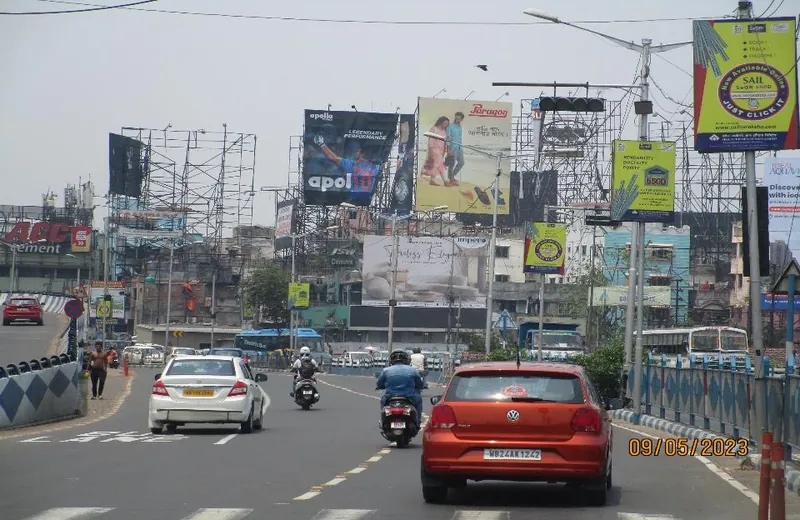
Sizes you will see on a site list
Hoarding sizes in India are quoted in feet, width first. Common sizes include 20 x 10, 30 x 15 and 40 x 20 feet, with bigger sites on highways and smaller ones on market roads. Sizes are not standard from one site to the next, so always design to the exact size on the site sheet and leave a safe margin around the edges for mounting.
A simple rule for the design: a driver has a few seconds at most. Keep it to one message, a large logo and as few words as you can. A phone number or long web address is hard to read at speed; a brand name people can search for works better.
How to judge a site
Before you book, ask for the details of each site and check them against your audience:
- Location and direction. Which road, which side, and which direction of traffic faces it. A site that faces outgoing traffic in the morning may suit a different audience from one facing the evening rush home.
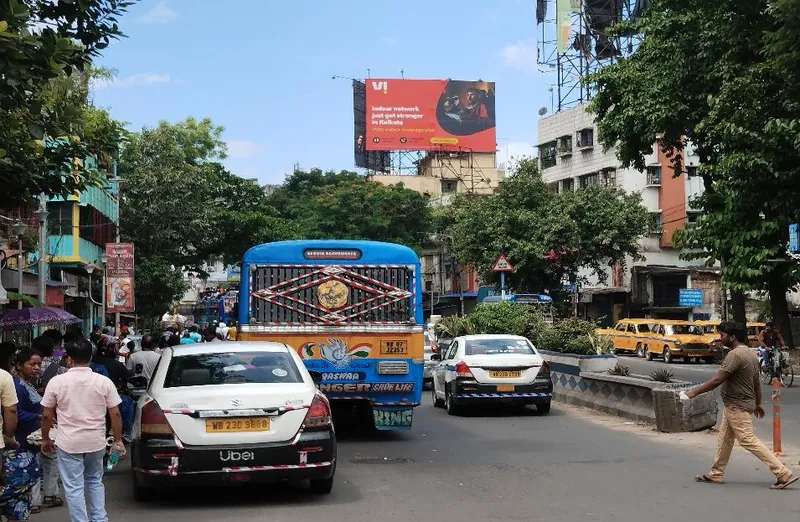
- Visibility. How far away it can be read, and whether trees, other hoardings, wires or a flyover block it.
- Traffic and dwell time. Junctions and slow stretches give people more time to read than a fast highway.
- Lighting. Whether it is lit, and until what time.
- Clutter. A site among ten others is easy to miss. A standalone site often does more work.
- Photos. Ask for a recent day photo and, for lit sites, a night photo, before you commit.
We shortlist sites by audience and traffic and share site details and photos before booking. You can also browse our media inventory to see the kind of sites available.
What drives the price
We do not publish rate cards, because the price of a hoarding depends on many things at once:
- City and exact location. A main junction in a metro city costs far more than a town street.
- Size and format. Bigger sites, back-lit boxes, unipoles and gantries cost more than small non-lit sites.
- Duration. Most sites are booked by the month, and longer bookings often get better terms.
- Season. Demand rises around big festivals, so good sites go early and cost more.
- Production. Printing, mounting and any changes of creative during the campaign are usually charged on top of the site rent.
- Local taxes and permissions. Hoardings are regulated by the local municipal body or authority, and the site owner normally holds the licence for the site.
For a quote, send us the city, the areas you want to cover, your dates and your budget range.
Planning for winter, November to February
The months after Diwali are busy for many categories: wedding jewellery and clothing, consumer durables, travel, real estate, education admissions and year-end sales. A few things are worth planning for in this season:
- Shorter days. It gets dark earlier in winter, so a big share of evening traffic sees your site after sunset. Lit sites, front-lit or back-lit, earn their extra cost in these months.
- Haze and fog. Parts of north India see fog and haze on winter mornings and nights. Bold colours, high contrast and very few words help a design stay readable.
- Wedding dates. Wedding shopping moves around auspicious dates that vary by region and community, so time bursts to the local calendar. Our festive-season guide has a week-by-week planning timeline.
- Book early for January. Many brands plan year-end and new-year pushes at the same time, so lock key sites before mid-December.
- Hoardings plus moving media. A hoarding holds one spot. Pairing it with cab branding or metro media on the same routes carries the message across the city.
Proof of display
A hoarding campaign should come with proof. Ask for dated photos when the creative goes up, again during the campaign, and when it comes down, plus night photos for lit sites. We manage printing, mounting and maintenance and share photo reports for every campaign.
A quick checklist
- Start from the audience and the roads they use, not from a list of sites.
- Shortlist sites with day and night photos, size, direction and lighting.
- Design for a few seconds of attention: one message, big logo, few words.
- Choose lit sites for winter evenings.
- Book key festive and year-end sites early.
- Agree the proof of display before the campaign starts.
Plan your hoardings with TaxiTop Media
TaxiTop Media is a Kolkata-based outdoor, transit and DOOH company. We plan hoardings and billboards in Kolkata, across West Bengal and in cities across India, alongside cab branding, metro, DOOH and on-ground activations. See our hoardings and billboards service, or email sales@taxitopmedia.in with your brief.